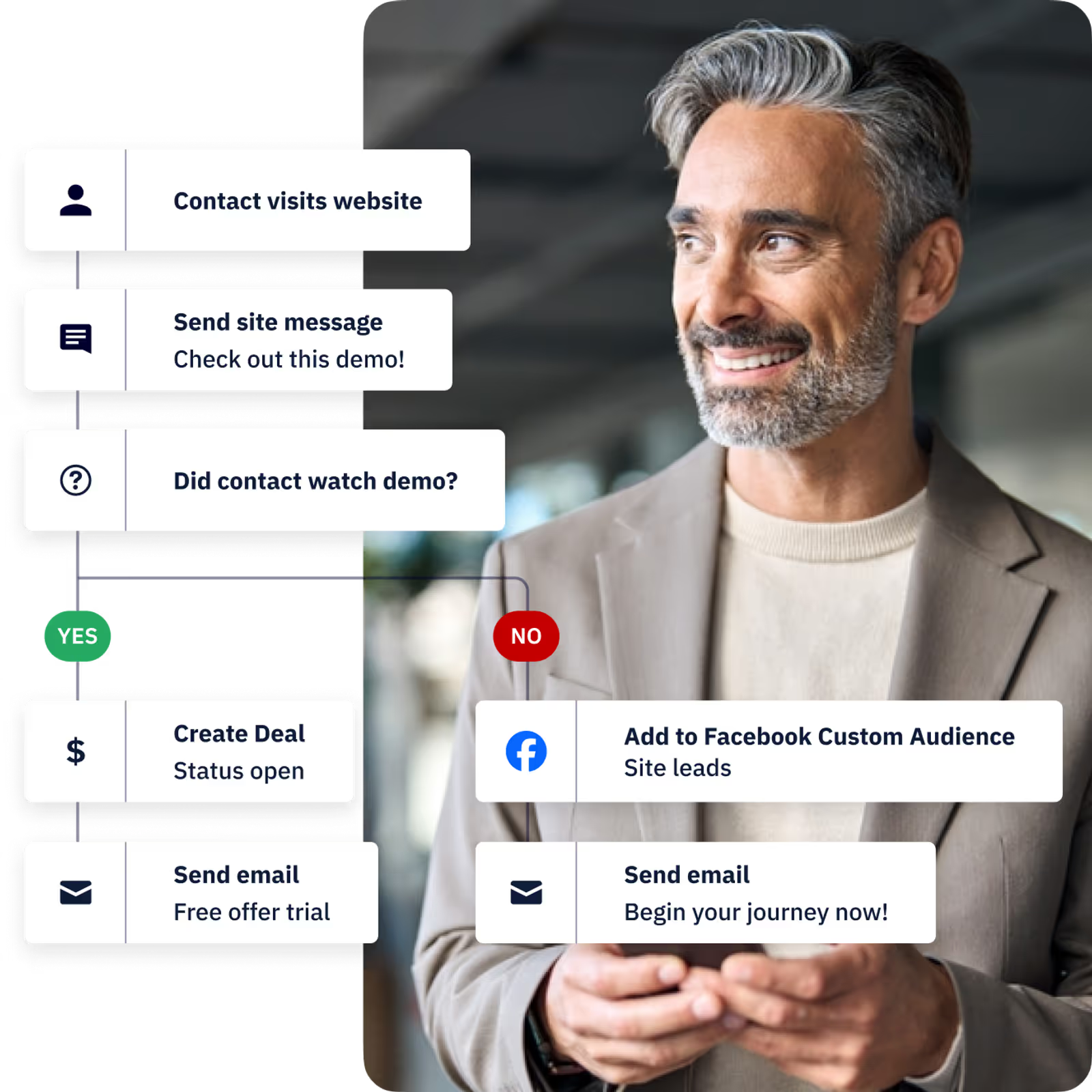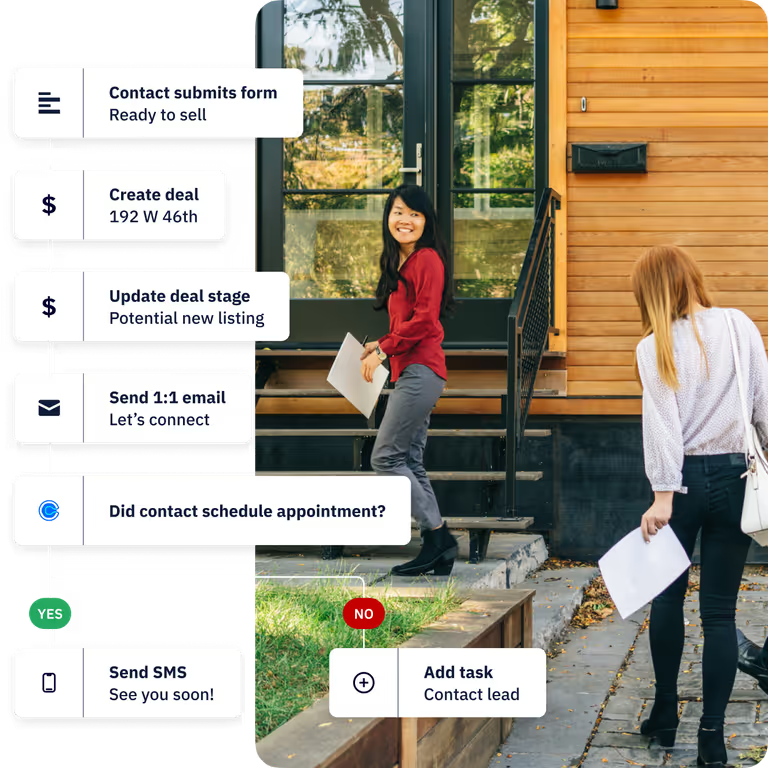
A shared customer record is useful only when each team understands what it contains, who can change it, and how connected tools affect it. The HoopAI CRM source describes standard and custom objects, flexible associations, property governance, validation, bidirectional sync, workspaces, automation, and combined reporting. Those elements create the technical shape of a shared record. Governance gives that shape a stable meaning across marketing, sales, and service work.
Why a shared record matters
Customer work often spans contacts, companies, deals, tickets, and activities. When each function maintains a separate copy, teams can act on different owners, stages, or contact details. A shared data model reduces that fragmentation by keeping the main objects and their associations in one operating context. The benefit is practical: a service conversation can be read alongside a deal, and a sales follow-up can account for recent customer activity.
Shared does not mean unrestricted. A record can hold common context while certain fields remain owned by a specific function. Define which information is authoritative, which information is descriptive, and which information is derived. This prevents a reporting field from becoming an informal note or a support status from being overwritten by an unrelated workflow.
Fields that need governance
Begin with fields that drive routing, reporting, or automation. Lifecycle stage, account owner, consent state, company association, ticket status, and deal stage usually carry more operational weight than free-form notes. For each governed field, publish its purpose, accepted values, entry rule, update rule, and owner. Validation should reject values that do not meet the contract instead of allowing near-duplicates to spread.
Custom properties are appropriate when the business needs information that standard fields cannot express. Create them with the same discipline. Avoid several fields that describe the same concept in slightly different language. Flexible associations are valuable when one contact relates to more than one company, deal, or ticket, but the relationship type still needs a clear definition so reporting does not count the wrong connection.
Connecting the tools around the record
The CRM source supports bidirectional sync with other tools. Before enabling two-way updates, decide the system of record for every synchronized field. Document direction, timing, conflict behavior, and deletion policy. If two systems can update an owner at the same time, the integration needs a deterministic winner or a review state. Otherwise the same field can oscillate without an obvious error.
Test the connection with a small set of records that includes blanks, changed values, duplicate-looking contacts, and multiple associations. Check the timeline as well as the final value. A sync can produce the expected field while losing the event context that explains it. The record should show enough history for a reviewer to understand where a change began.
Reviewing data ownership
Assign ownership at two levels. A business owner defines what a field means and approves changes to its rules. A technical owner maintains validation, synchronization, and automation. Both should review exceptions because a technical failure and a disputed business definition can look identical in a report. Keep the escalation path visible in the field documentation.
Use combined dashboards to find patterns across marketing, sales, and service, as described in the CRM source. Treat those dashboards as a review surface rather than automatic proof of accuracy. Unexpected blanks, sudden shifts, or conflicting totals should lead back to the field contract and synchronization history. A shared record earns trust through explainable ownership and controlled change.