Can I reference variables in conditions?
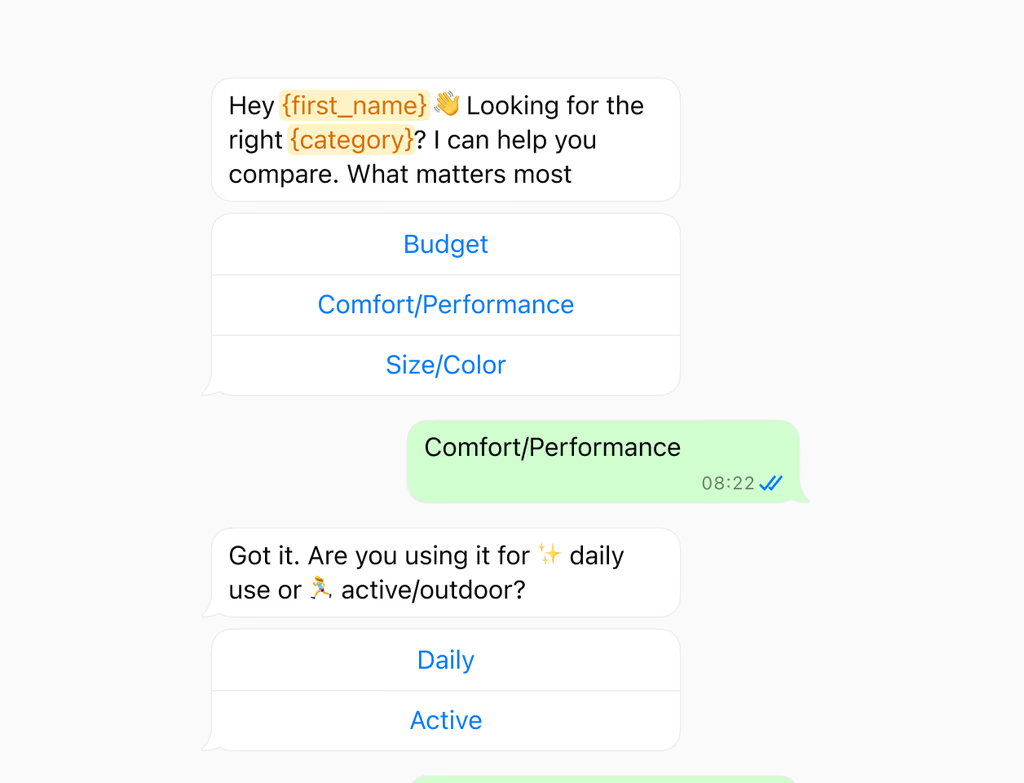
Yes. Use runtime variables to evaluate branches and personalize responses. This is essential for creating dynamic and personalized experiences for your customers within the Hoop platform. By referencing variables, you ensure your logic adapts to the current user state or context, such as their purchase history, location, or recent interactions.
Using variables in Logic & Flow Control allows for sophisticated routing and decision-making within your workflows. This leads to more precise targeting and better customer outcomes. Variables make flows reusable and robust, preventing the need to build separate paths for every slight variation in user data.
How do I prevent loops in my logic flows?
Set max attempts and tracked states; the canvas visually highlights potential loops during validation. The platform automatically checks for recursive paths during design, providing warnings so you can correct them before publishing. This safeguards your agents from getting stuck in infinite processing cycles, which could lead to excessive usage or poor customer experience.
You should also implement explicit end points or exit conditions for every branch to ensure predictable termination. Robust error handling, including fallbacks and merges, also contributes to stability and loop prevention. Hoop helps maintain the integrity of your workflows through these preventative measures.
What are the key benefits of using Logic & Flow Control?
Logic & Flow Control simplifies complex automation by letting you visually define paths, timing, and outcomes. The primary benefit is creating resilient, human-readable flows that scale with your business needs. This leads to more predictable agent behavior and improved operational efficiency.
Key benefits include:
- Reduced development time with visual condition and timing tools.
- Increased reliability through defined retries, fallbacks, and merges.
- Better customer experiences due to timely and relevant interactions.
- Coverage for every scenario using edge conditions based on variables or events.
Which Hoop pricing plans include Logic & Flow Control?
The Logic & Flow Control feature is available across the core, pro, and enterprise pricing plans. The level of complexity, number of flows, and advanced features like custom integration steps may vary based on your specific plan tier. This tiered approach ensures that businesses of all sizes can implement sophisticated workflow automation.
For instance, the enterprise plan typically offers higher limits on flow complexity, more comprehensive error logging, and dedicated support for mission-critical operations. Review your current plan details on the Hoop website to understand the exact usage limits applicable to your environment, particularly regarding retries and API throttle limits.
How does this feature integrate with my existing APIs and tools?
Logic & Flow Control integrates with your external services using integration steps for APIs and tools. This means your agents can trigger actions, retrieve data, and update records in third-party systems directly within the flow. Hoop provides connection management to securely store credentials and configuration details for these external services.
The integration capabilities support:
- Calling custom APIs to fetch or send data.
- Connecting to popular marketing, CRM, and support platforms.
- Ensuring data synchronization across all your business applications.
This allows you to ship production-grade flows that are seamlessly connected to your entire technology stack.
How does Hoop ensure data security and privacy in the flows?
Hoop ensures security and privacy by encrypting data used within variables and conditions. All data handling within Logic & Flow Control adheres to industry standard security protocols and compliance requirements. Access to flow configuration is strictly controlled based on user roles and permissions within the platform.
The visual canvas isolates your flow logic from external threats, and audit logs track all modifications to the flow design. When integrating with third-party tools, credentials are tokenized and securely managed. We prioritize your customers' data privacy by allowing you to define precise data retention policies for tracked states and logs.