What can the Hoop API do for my business and systems?
The Hoop API Access feature allows you to execute your agents programmatically. This means you can easily pass inputs and stream results directly into your existing business systems and workflows. It is essential for organizations that need to tightly integrate their AI agents with their operational stack for seamless automation.
The API helps you make agents a native part of your tech stack, ensuring data and automated workflows remain in constant sync. Key benefits include:
- Triggering agents from external applications.
- Maintaining data consistency across platforms.
- Enabling resilient, large-scale automation.
How are API keys and access permissions managed in Hoop?
Hoop manages access keys through secure connections, utilizing scope-based permissions to control what each key can do. This allows for granular, auditable access management, which is crucial for security. Key rotation support is also provided, ensuring you can regularly update your credentials to minimize risk.
To set up access, you connect with secure keys and define the necessary scopes for your use case. This controlled environment ensures that only authorized processes can trigger agent runs and exchange sensitive data.
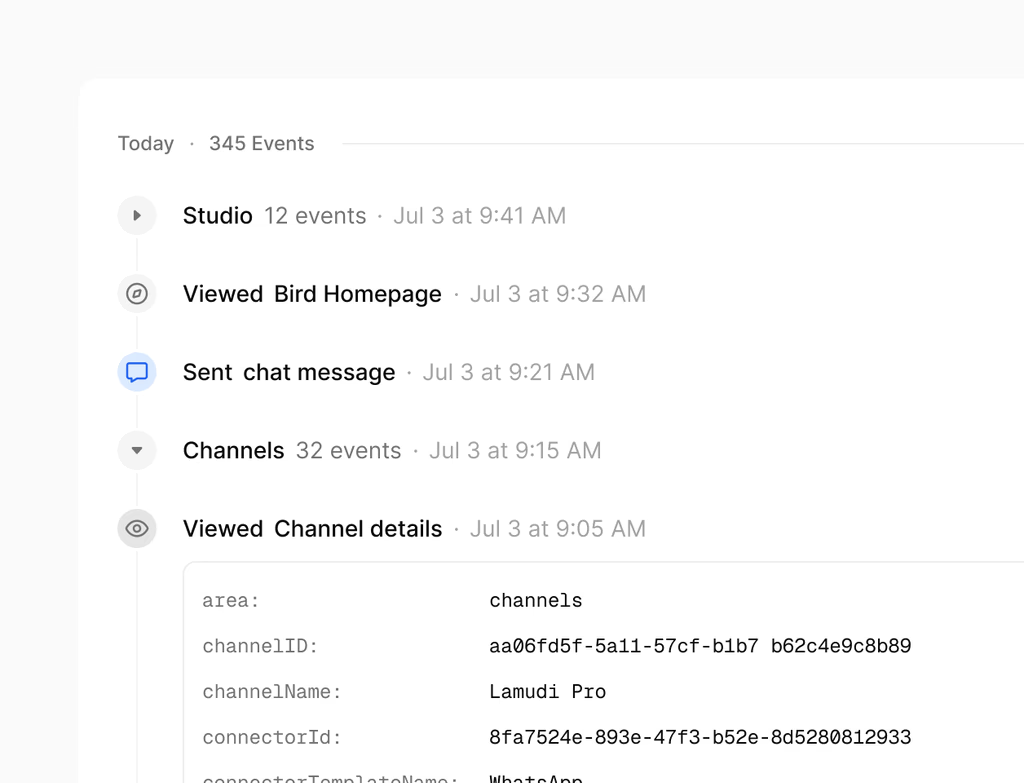
The system uses clean authentication methods to keep access controlled and fully auditable, providing a transparent view of all API activity within your Hoop platform.
Does Hoop impose any rate limits on API usage?
Yes, Hoop implements rate limiting to protect the stability and performance of the platform for all users. These limits are in place to ensure fair usage and to prevent accidental or malicious overloading of the services. Specific details on the rate limits vary depending on your usage and plan.
If you anticipate extremely high volumes of API calls that might approach these limits, you should contact the Hoop team. They can provide specific information tailored to your operational needs and discuss options for adjusting limits if necessary for your large-scale automation efforts.
What steps are necessary to integrate agents using the Hoop API?
The integration process begins with using secure keys and defining scopes to connect your external systems to the Hoop platform. Once connected, you can trigger agent runs and manage the flow of data.
You can send events and payloads to Hoop and receive the results or outputs back, keeping all your different systems harmonized. The API is designed to fit cleanly into your existing infrastructure, enabling various operational processes:
- Authenticate securely with scoped keys.
- Trigger agents programmatically via the API.
- Exchange events and data payloads.
- Stream results back into your systems.
Which pricing plans include access to the Hoop API feature?
API Access is available across multiple plans within the Hoop platform to accommodate different organizational needs. The feature is included with the core, pro, and enterprise pricing tiers. This ensures that businesses of various sizes can leverage programmatic control over their agents.
While the feature is broadly available, usage limits and access levels may differ between the plans. For example, higher-tier plans like 'enterprise' might offer higher rate limits or more comprehensive operational metadata management capabilities. Check your current plan or the Hoop pricing structure for specific details regarding your allowed usage.
How does the API help automate workflows at a large scale?
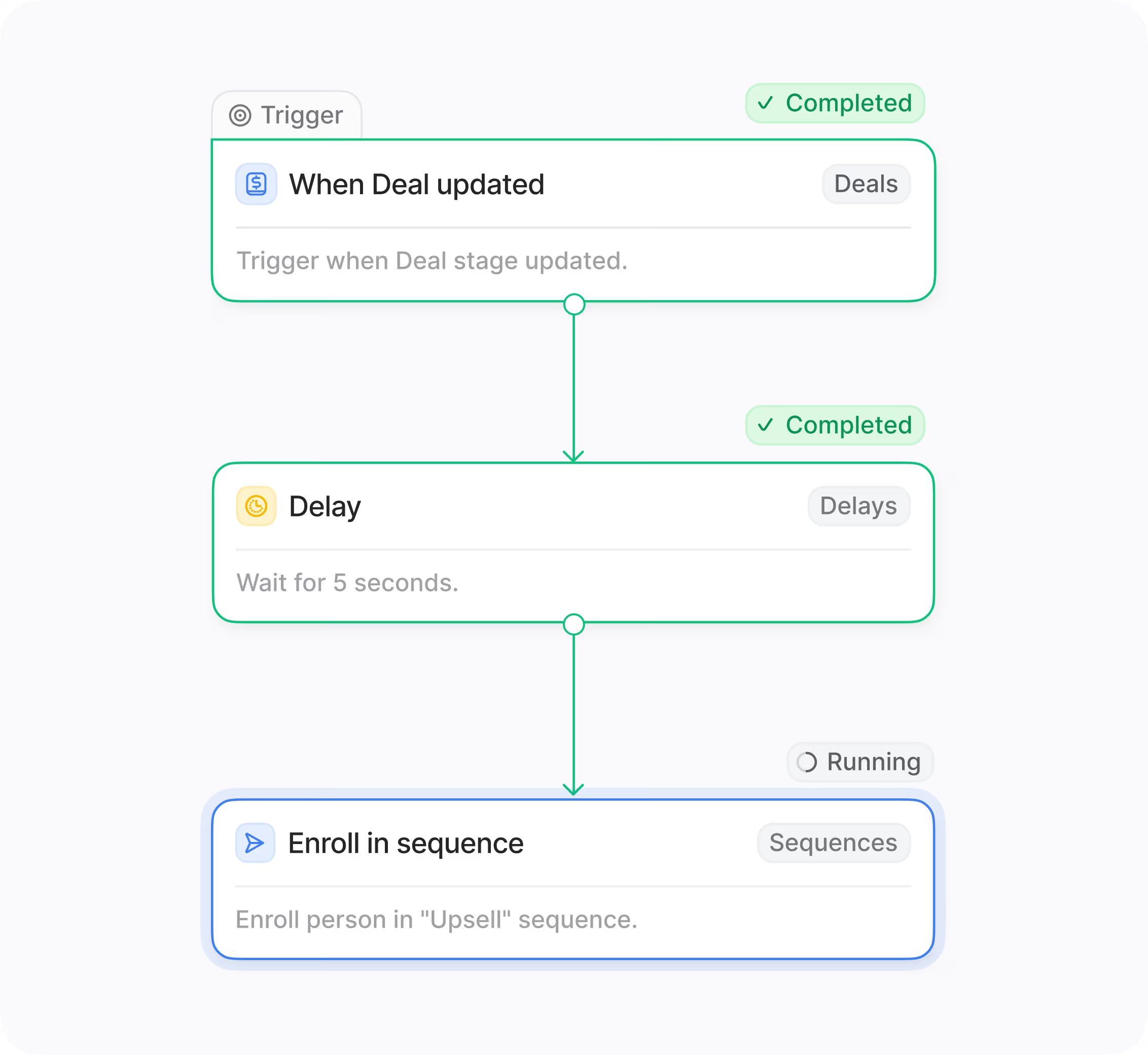
The API is fundamental to automating operations at scale by allowing you to combine programmatic agent execution with other resilient tools. You can use APIs in conjunction with scheduled jobs and webhooks to create sophisticated, reliable workflows that execute without manual intervention.
This combination allows for robust, event-driven architecture where systems stay in sync by sending and receiving data as needed. Using webhooks, for instance, an external event can instantly trigger an agent run in Hoop, ensuring immediate responsiveness for critical business functions. This dramatically increases efficiency and speed.